



Key Takeaways
- A car collision unfolds in three stages: vehicle collision, human collision, and internal collision, each with distinct injury risks.
- Proper use of restraints like seat belts and airbags is critical in minimizing injuries during collisions, significantly reducing fatality risks.
- Immediate medical attention and legal support after a collision are essential for addressing injuries and navigating insurance claims effectively.



The Three Stages of a Collision Explained
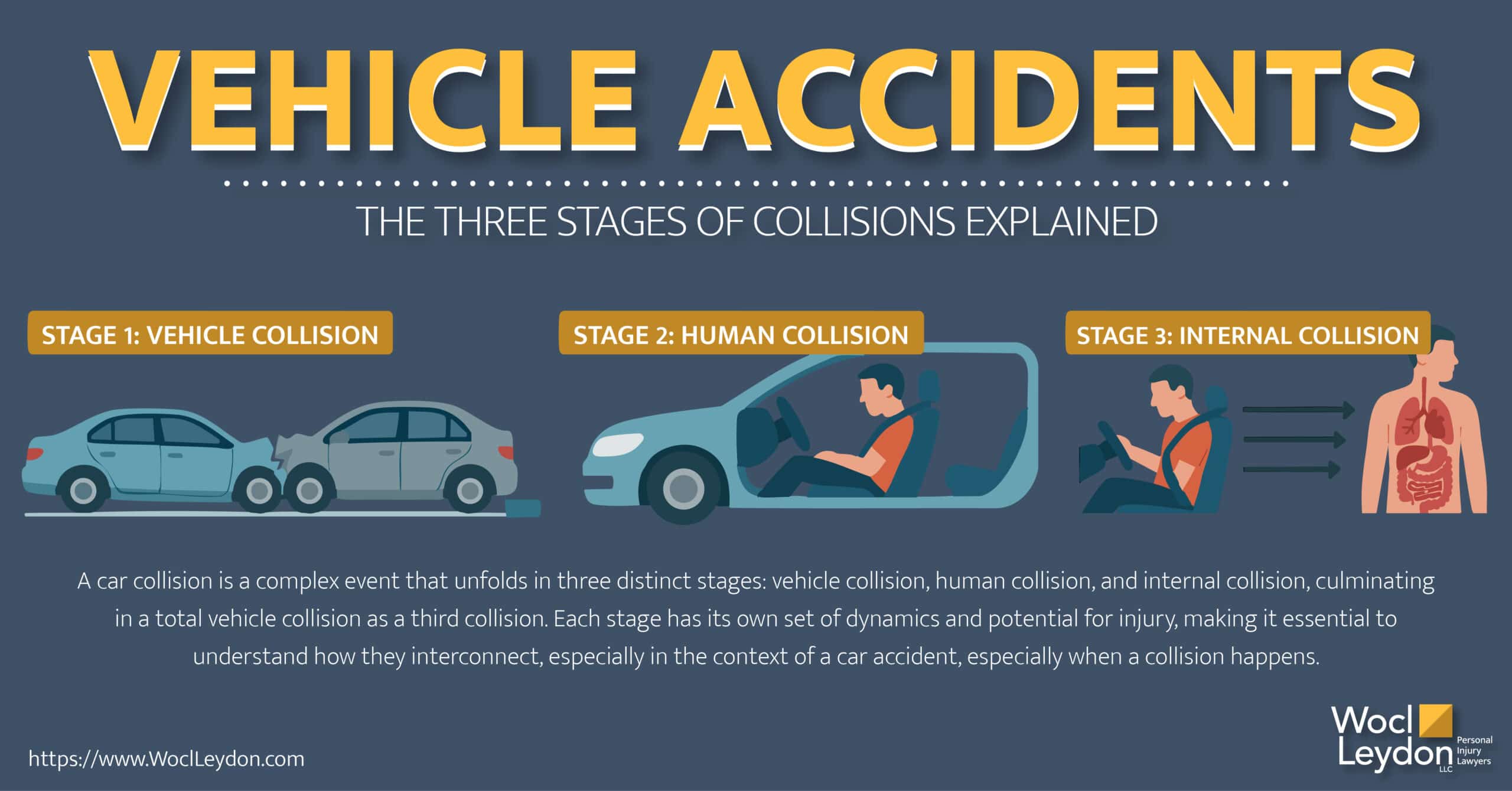
A car collision is a complex event that unfolds in three distinct stages: vehicle collision, human collision, and internal collision, culminating in a total vehicle collision as a third collision. Each stage has its own set of dynamics and potential for injury, making it essential to understand how they interconnect, especially in the context of a car accident, especially when a collision happens.
The first stage, known as the vehicle collision, occurs when the car initially impacts another object. This is followed by the human collision, where the occupants inside the vehicle are thrust forward. Finally, the internal collision involves the movement of internal organs within the body due to inertia. Understanding these stages is crucial for recognizing the potential injuries and implementing effective safety measures.
Delving deeper into each stage reveals the full scope of what happens during a collision.
Stage 1: Vehicle Collision
The vehicle collision, the first collision stage, occurs when the vehicle strikes another object in a vehicle crash. This stage transpires in a fraction of a second — approximately one-tenth of a second at 30 MPH — and can involve the vehicle crumpling up to two feet to absorb some of the impact forces, particularly in specific crumple zones. The severity of this impact is influenced by various factors such as speed, vehicle weight, impact angle, and car structure strength.
During this second stage, the vehicle begins to deform, and its energy is transferred to the structure of the vehicle and the objects it collides with. This initial contact is what sets the stage for the subsequent human and internal collisions. The process happens so quickly that occupants often cannot react, highlighting the importance of deploying airbags and other safety features to mitigate injuries.
Stage 2: Human Collision
During the human collision stage, occupants continue to move in the same direction at the car’s normal speed until an object within the car, like the steering wheel, dashboard, or windshield, stops them. This stage occurs because the occupants’ bodies are still in forward motion even though the car has come to a sudden halt.
Unrestrained occupants can be forcefully thrown forward, leading to severe or fatal injuries from colliding with hard surfaces or loose objects inside the vehicle. Seatbelts fastened and airbag deployment play a vital role in this stage by restraining the occupants in the driver or passenger seat and preventing them from being thrown forward, significantly reducing the risk of serious injury. The passenger seat is particularly important in ensuring safety, just as the back seat also requires attention.
Stage 3: Internal Collision
The internal collision involves the movement of internal organs and body tissues inside the body. Even after the body is restrained by seat belts or airbags, the internal organs continue moving due to inertia, colliding with bones and other organs. This can lead to serious internal injuries, such as traumatic brain injuries, and damage to vital organs like the liver and spleen.
This stage underscores the need for proper restraints and safety measures to minimize the risk of internal injuries. It also highlights the necessity for crash victims to seek immediate medical attention, as internal injuries may not be immediately apparent but can have severe, long-term health consequences.
We're Here to Help.
Common Injuries Sustained in Each Collision Stage
Injuries from car collisions can vary widely depending on the stage of the collision and the severity of the impact. Recognizing the common injuries in each stage helps in understanding the risks and the importance of timely medical intervention.
From whiplash and facial injuries in the vehicle collision stage to neck fractures and soft tissue damage in the human collision stage, each phase presents its own set of challenges. The internal collision stage, in particular, can result in serious internal injuries that may require extensive medical treatment.
Exploring the common injuries associated with each stage of a collision reveals the specific risks involved.
Vehicle Collision Injuries
Whiplash, facial injuries, and various types of fractures are common during the vehicle collision stage. Whiplash injuries, which involve damage to the neck’s soft tissues and neck injuries, are particularly prevalent due to the sudden, forceful movement of the head. Facial injuries often result from broken glass or impact with hard surfaces, causing serious lacerations and other facial trauma.
Spinal cord damage and fractures are also common, highlighting the importance of using seatbelts and correctly positioning car seats to minimize severe injury risk.
Human Collision Injuries
The human collision stage often results in critical injuries like fractures of the neck or collarbone. These injuries occur when the body is forcefully thrown forward and collides with parts of the vehicle or other occupants.
Soft tissue injuries, including sprains and strains, are also frequent during this stage due to the body tissues absorbing the shock of the collision. These injuries can lead to significant pain and require extended periods of recovery and rehabilitation.
Internal Collision Injuries
Internal collision injuries, often the most severe, include traumatic brain injuries and damage to vital organs. The movement of the brain against the skull can lead to concussions and other forms of serious traumatic brain injury during this stage. Additionally, internal organs can be damaged when the body is violently thrown against the vehicle’s interior.
These injuries underscore the need for immediate medical attention after a car crash, as internal injuries may not be immediately visible but can cause devastating long-term effects.
How Proper Restraints Can Save Lives
Seat belts and airbags are critical in protecting occupants during a collision. Seatbelts save lives by restraining the body and preventing occupants from being thrown forward during the human collision stage. The shoulder belt and lap belt are designed to distribute the force of the impact across the body’s strongest areas, minimizing the risk of severe injuries.
Correctly used restraints can significantly reduce the risk of fatalities and serious injuries. For instance, seat belts in light trucks can reduce fatal injury risks by 60%, and moderate-to-critical injury risks by 65%. Proper restraint through fastening seatbelts and ensuring the lap belt is tight is a life-saving difference in a crash.
Technological Advances in Vehicle Safety
Technological advancements in vehicle safety have greatly enhanced our ability to prevent and mitigate injuries from car collisions. Automatic Emergency Braking (AEB) systems, which apply the brakes automatically to prevent collisions, and Blind Spot Warning (BSW) technology, which alerts drivers of vehicles in adjacent lanes, are now standard in many vehicles.
Other innovations include Adaptive Cruise Control, which maintains a safe distance from the car in front, and Rear Cross Traffic Warning, which alerts drivers of potential hazards when reversing. These technologies enhance overall road safety and reduce the severity of injuries in the event of a crash.
Steps to Take After a Car Crash
Knowing the immediate steps to take after a car crash is crucial for ensuring safety and protecting legal rights. Seek medical attention immediately, even if you feel fine, as some injuries may not be apparent right away. Document the accident scene with photos and gather witness information, which can be invaluable for your insurance claim.
Exchange contact and insurance details with the other driver and notify your insurance company promptly to expedite the claims process. These steps help navigate the aftermath of a collision more effectively and ensure you receive the necessary support.
Legal Support for Collision Victims
If involved in a car collision, seeking legal support can be crucial for navigating the complexities of medical bill payments and insurance claims. An attorney can help accurately assess the value of your case, considering various damages and losses. They can negotiate with insurance companies on your behalf to prevent them from minimizing your payout.
In no-fault states, you can file claims for medical expenses through your insurance regardless of who was at fault for the accident. Consulting with a legal expert can help recover medical costs and ensure your rights are protected throughout the process.
Frequently Asked Questions
What are the stages of risk of collision?
Yes, possibly. Connecticut uses comparative negligence so that your recovered amount might be diminished according to your percentage of fault.
Why is it important to understand the stages of a collision?
No, it doesn’t. A claim might exist even if the piece of equipment is old or has changed ownership.
How do proper restraints save lives?
It is difficult to predict the length of time until resolution because factors affecting duration include the complexity of the case, the number of parties involved, and whether or not it reaches settlement or trial.
What should I do immediately after a car crash?
A recall supports your claim, but you will likely still need to demonstrate how the defect resulted in your injuries.