



At Wocl Leydon, we provide information on each factor so you can better understand what a potential settlement includes, what issues remain open, and which direction may be appropriate based on your circumstances and offer the most advantage.
If someone else’s carelessness caused your injuries, you may have a cause of action. However, if you are still unsure whether you can file a suit after being struck by a tractor-trailer, click here for more information.



Why an Average Settlement Is Not a Price for Your Case
An average amount received from settling a case (average) is based upon the number of cases included in the specific sampling pool of cases. The value of this “average” depends on what types of injury, jurisdiction, insurance limits, and outcomes were included in the sampling pool. As stated before, two large settlements can greatly increase the average.
The loss resulting from the same medical condition can vary dramatically. For example, if you are diagnosed as having a herniated disc in your back and you are able to recover completely so that you can go back to work. However, there are many others who have been diagnosed with a herniated disc but continue to receive ongoing treatment and can no longer do their previous jobs. These variations matter when evaluating how much money should settle your case, rather than using a random number from a group of unrelated cases.
A settlement is an agreement between parties regarding a claim. A Verdict is a determination made at trial. Therefore, when you compare figures reported in publications, make sure you know what type of determination was reported and whether it relates to one individual’s claim or multiple individuals’ claims.
Wocl Leydon’s Published Truck Accident Results
In addition to our individual truck accident settlements, our attorneys have obtained the following results from prior cases:
A $18.5 million outcome for a client who was injured in a tractor-trailer collision and suffered from a fractured disc in his lower back, as well as injuries to his neck (a strain/sprain) and developed post-concussive symptoms.
A $3 million outcome for the parents of a five-year-old who was struck by a semi-tractor-trailer, resulting in their son suffering a severe traumatic brain injury and severe fractures to both legs.
The above-listed results reflect only the results of individual cases. They should be used as examples only and not as an average outcome value or a promise of what will happen with your claim. Each case has its own unique evidence, injuries, circumstances, and other factors that can affect the final outcome.
What Affects 18 Wheeler Lawsuit Settlements?
 Medical Needs and the Course of Recovery
 Medical Needs and the Course of Recovery
The first step in assessing how much your claim is potentially valued at involves reviewing your past treatment and what treatments your healthcare professionals believe you will require going forward. For example, surgery, physical therapy, prescription medications, assistive devices (e.g., a walker or cane), and assistance with daily living needs can all create long-term costs beyond what your health insurer covers.
It may be a good idea for your provider(s) to document your future medical needs. In some cases, your treating physician will recommend additional procedures or advise against assessing potential long-term impairments until further testing has been performed. Therefore, if you settle before these questions are answered, you could be left financially responsible for the cost of future services not included in the initial settlement offer.
Income and Ability to Work
In addition to missed work checks, an injury may limit your future earning capacity, whether it affects your ability to return to a physically demanding occupation, work the same number of hours as before the injury, or maintain the same level of earnings.
Documenting your past wages via pay stubs, income tax returns, employer information, and/or any medical restrictions that limit your work capabilities will provide context to those types of economic losses. If you are self-employed, documenting your business’s profits/losses before and after your injury may help distinguish lost personal income from normal fluctuations in your business’s profitability.
Pain and Changes to Daily Life
The pain, emotional distress, and loss of daily routines/hobbies as a result of your injuries can all be significant factors. The importance of clearly explaining these types of losses, whether or not they appear on a medical bill, cannot be overstated.
Connecticut allows for compensation for both monetary (financial) and non-monetary (non-financial) losses. Because each person’s experience is unique, no standardized “settlement multiplier” provides an equitable settlement amount based solely on the severity of an individual’s injuries.
Disputed Responsibility
An insurance company may dispute what caused the accident and/or assert that you contributed to the accident. Generally, if your negligence in causing the accident does not exceed the total negligence (or “fault”) attributed by others who would have liability for which you seek compensation, as well as any other party with which you may have entered into a settlement, then you will still be able to collect on your losses. However, because your proportionate share of negligence determines the amount of loss you may recover, this potential dispute over liability could influence your negotiation strategy.
An adjuster’s position on a specific fault percentage reflects their opinion based on the information they have and the supporting evidence in the case, and it should not be treated as a court determination.
Insurance and Other Available Payment Sources
Determining how much money you lost due to the injuries sustained in the accident is a different issue than determining where that money will come from. In some cases, a high-value policy will not result in receiving the full policy limits. Furthermore, while you may have multiple sources of compensation, that does not mean every insurance policy covering the businesses involved in the accident will cover your injuries.
We review your ability to obtain compensation through both your assertion of the other parties’ liability and available coverage. If two or more individuals suffer injuries from a single incident, the number of injured people may affect how much insurance money is available and how those funds are distributed. Also, simply identifying another business does not automatically entitle you to access its insurance coverage. To establish entitlement to coverage, you need to demonstrate a valid claim and that such coverage exists. This depends on the terms, limits, conditions, and exclusions of the applicable coverage, as well as the facts of the claim.
We're Here to Help.
How to Evaluate an Insurance Settlement Offer
To assess the merits of an insurance settlement, you need to look at more than just how much money is compared to what you are currently paying in medical bills. A proper assessment should consider your current medical situation, the extent of your documented losses, and any aspects of your claim disputed by the parties involved.
We will assist you in evaluating these areas as follows:
- What is left to be done medically? Document all treatments (recommended), including associated costs, and identify any medical questions remaining unanswered.
- What income has been lost? Document time away from work (supported), impact on future earning ability (supported).
- What issues are disputed? Is there a disagreement regarding liability (fault), the reason for an injury, cost of treatment, or whether your insurance covers this issue?
- Who/what are you giving up? Who/what companies/businesses/entities would be released by the proposed agreement? What claims would be resolved?
- What will you gain? Estimate what fees/expenses/repayment obligations you will incur prior to determining if the proposed settlement meets your needs.
For example, the party offering the settlement may agree that their vehicle (truck) caused the accident; however, they may disagree about whether subsequent back injuries resulted from the initial accident. To support this position, the victim and their lawyer will need medical documentation showing a direct relationship between the two incidents. Listing the total amount of your medical bills does not necessarily establish this relationship.
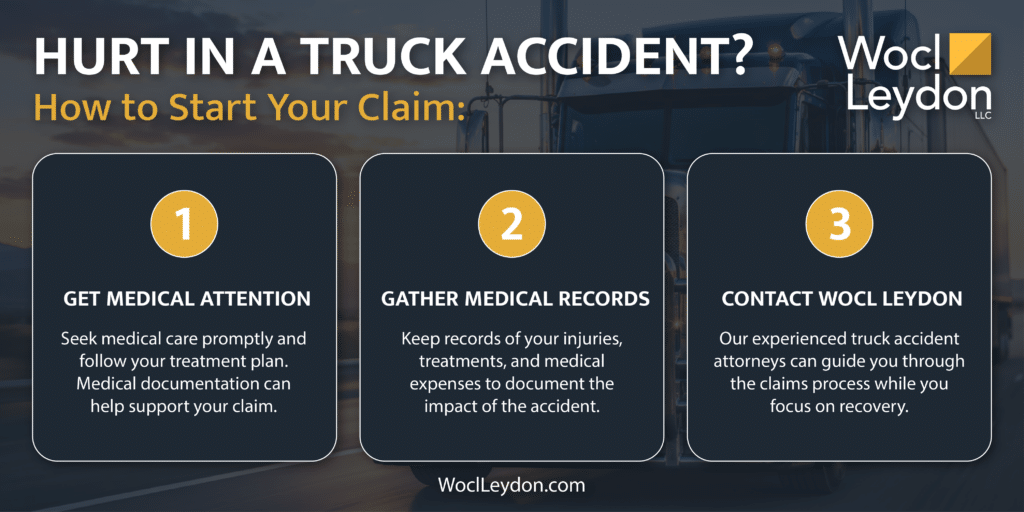
How Much of the Settlement Would You Receive?
Your gross settlement is the total agreed-upon settlement. The amount remaining as part of your net recovery is determined by subtracting all applicable costs (fees, expenses, etc.) from the gross settlement. Therefore, it is important to understand what costs may be deducted from your gross settlement so you can determine what funds will be available for your use.
Deductible costs typically include attorneys’ fees, case expenses, and any applicable medical expense or insurance repayment obligations that apply to the case. These deductibles are based on your attorney’s fee agreement with you, the payments that he/she has made on your behalf prior to settlement and/or trial, and any specific statutes applicable to your jurisdiction (i.e., Connecticut).
Do Not Assume That A Fee Quote From Another State Applies To Your Case
Contingent fee agreements vary greatly from one state to another. In addition to a contingent fee percentage, each state also varies in how it treats case expenses. Before accepting a contingent fee quote, ask about their policy on case expenses. Finally, ask how they calculate their contingent fee and whether this calculation includes additional fees for services such as mediation, arbitration, etc. In Connecticut, your written fee agreement should explain the percentage, how case expenses are handled, and when exactly expenses are deducted.
Recovery By Medicare
Medicare may pay many injury-related claims conditionally. If the claim was paid conditionally, Medicare may attempt to recover the amount of those conditional payments from the recovery. Medicare has processes for reviewing disputed claims and allows the individual who received benefits to dispute any portion of the amount being sought for reimbursement. It is possible that other health plans or benefit programs may have different repayment policies.
Estimate Of Net Recovery
Before agreeing to a proposed settlement, ask your attorney to estimate your net recovery. Break this down into three categories: the gross settlement amount; an estimated list of all anticipated deductions; and the estimated amount that will actually go into your pocket. Due to various reasons, some figures included in these estimates may be tentative pending confirmation of final accountings.
What Can Affect the Settlement Timeline?
Developing a good timeline will depend on the remaining amount of work. Your medical prognosis may be evolving, the insurance company may require additional documentation to support its position, or the parties may continue to debate who is responsible for the injury and what damages you sustained.
It does not mean you will have completed all forms of treatment before a case can be settled. It simply means we can reasonably evaluate your future needs. Also, starting a claim as early as possible allows the legal work to move forward while you recover from your injuries.
In addition, if negotiations fail to produce a settlement, then litigation provides a method to obtain necessary documents and testimony. Although the case is pending litigation, you can still reach a settlement. An attorney should never agree to a specific settlement date without considering the applicable factual and procedural issues.
An Agreement and Payment Are Two Different Milestones
If a settlement is reached, releases, payment processing, and resolution of repayment claims (e.g., Medicare/Medicaid) can be delayed until funds become available for distribution. If any steps remain, ask them to explain why, rather than assuming that because an agreement was reached, you will receive a check immediately.
Protect the Lawsuit Deadline While Negotiations Continue
In Connecticut, you generally have two years to file a personal injury lawsuit from the date you were injured or from when you discovered, or reasonably should have discovered, the injury. In most cases, you cannot file more than three years after the act or omission that caused the injury, although some exceptions may apply. The longer statute of limitations does not give every person three years to file a case, and different rules or exceptions may apply in particular cases.
Some cases may be subject to other statutes of limitations. Settlement discussions alone are not sufficient to extend a statute of limitations. Ongoing medical treatment is no reason to delay seeking legal counsel. Our attorneys will determine which statute applies and evaluate whether it is possible to settle the case prior to filing suit.
Discuss Your Settlement Options With Wocl Leydon
Settlement options for an eighteen-wheeler accident require you to consider your injury and the strength of your case. We will thoroughly investigate the facts surrounding your claim, identify applicable insurance coverage, assist with settlement negotiations, and litigate if necessary.
We are located in Stamford, CT, at 80 Fourth Street. To schedule a free consultation, please call us at (203) 693-9070 or submit a request through this website. Please bring any offer you may have already received from another party; we can then evaluate the terms of their offer and discuss any other issues that arise.
Frequently Asked Questions
Can a Claim Settle Without Filing a Lawsuit?
Yes. In many cases, you can reach an agreement to resolve the dispute before filing a lawsuit. However, whether this is possible depends on several factors, including the evidence you have regarding liability and the insurance company’s position, as well as the time you have to pursue a lawsuit if necessary.
Are Truck Accident Settlements Taxable?
Taxation of compensation for personal injury, other than interest and punitive damage awards, generally excludes taxable income under federal law; however, exceptions may apply. Since a portion of the award may consist of previously deducted medical expenses and/or interest, which are taxable, it is recommended that a qualified tax professional evaluate each component of the settlement award to determine how to treat each separately.
Related Articles
How Can I Sue for Being Hit by a Semi Truck? Legal Options Explained
Who Is Most Likely to Be Injured or Killed in a Work Zone-Related Crash? Key Facts & Safety Tips
This Article Has Been Reviewed By an Attorney