



Recent Case Wins

We Get Results*
Each year, residents in Stamford are injured while on properties that could be made to be safer. Our Stamford premises liability law firm has seen this over and over again: A property owner or person in control of property takes a shortcut by ignoring hazards, or is too busy with other things to fix something, and another person gets hurt.
The term premises liability does include the typical “slip and fall” case from the grocery store. However, these cases can occur in many different types of locations, including but not limited to apartment complexes, shopping malls, restaurants, office buildings, hotels, schools, parking garages, streets/pedestrian walkways/parks, and personal residences. If a property owner or person in control of property did not take reasonable steps to keep his/her premises safe and you were injured as a result, there is a possibility for you to file a lawsuit.
Why Choose Wocl Leydon
 For decades, our lawyers have been assisting injured individuals in Connecticut with their cases. The attorneys at our law firm will take an injury case all the way through to jury trial if we believe that is the best option and does not include settling for the initial offer made by the insurance company.
Our Stamford office serves the areas in which the majority of injuries occur, as well as the property owners and managers within those same areas. We also understand how the local courts work. We represent our clients in personal injury claims of all types, from a defective piece of equipment on a playground that resulted in a $1,000,000 award for a child who was hurt while playing (see below), to other serious injuries caused by negligence. While some of our clients comment about the amount of money they received from their injury case, many more comment about how we treated them like a person and returned their calls.
Consultations are free. We will let you know whether your case has merit, based upon what you tell us.



What Is Premises Liability?
A premises liability case allows a person injured to seek compensation from the person or entity that owns, possesses, or controls the property due to their failure to create or maintain a safe physical environment for visitors. This type of negligence claim has four main components:
- Duty of care: the duty of the property owner or person in control of property to provide reasonably safe conditions. Duties include inspecting and maintaining the property, warning potential visiting parties of dangers known or reasonably should have known about.
- Breach: the property owner or person in control of property failed their duty to keep the property safe for visitors, created a dangerous condition or failed to warn about a dangerous condition.
- Causation: an actual hazard on the property was a substantial factor that resulted in injury to a visitor. Any dangers or hazards that could have been anticipated by a reasonable property owner, but reasonable care was not exercised, causing an injury.
- Damages: the result of the injury the victim suffered, such as medical expenses, lost wages, pain and suffering, permanent impairment, or other possible compensable losses resulting from the occurrence.
In simple terms, the law provides a remedy to be used against someone who failed in their responsibility to provide a safe environment for you as a visitor.
Connecticut Premises Liability Law Explained
Connecticut also provides for reasonable use by landowners, and the degree of responsibility to be taken depends upon the visitor’s status.
The duty of reasonable care owed to visitors can vary based upon whether the person visiting was invited onto the landowner’s premises; if so, they would be considered an invitee. Property owners generally owe lawful visitors a duty to use reasonable care to inspect for, discover, and either correct or warn against dangers they knew or reasonably should have known about.
This includes providing reasonable inspections of the landowner’s property. Frequency depends on varying factors, such as the nature of business and prior incidents. If someone is allowed onto the landowner’s property, but is not invited, then this person will be classified as a licensee. Connecticut law does not support an unconditional duty to warn licensees of obvious dangers.
However, trespassers generally are not owed the same level of protection under Connecticut law. Exceptions are made with respect to minors.
Types of Stamford Premises Liability Cases
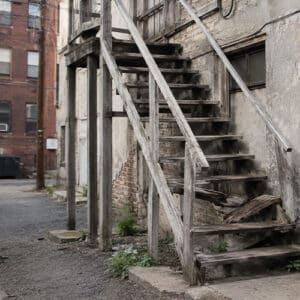
We experience a wide variety of injury cases across all types of properties. Injuries that result from slips/falls on wet floors, trips and falls on uneven surfaces, falls down stairways with no handrails and/or improper lighting, and falling merchandise in retail environments fall into this category.
A property owner or person in control of property may be responsible for building system failures, including elevator/escalator malfunctions resulting from failure to properly maintain these systems. As such, we find specific hazards unique to each type of property including:
- Apartment complexes – Stairwells, lighting and balcony hazards
- Restaurants – Spill and icy entrances
- Hotels – Pool and parking lot hazards
- Shopping Centers – Potholes in parking lot and entrance hazards
- Parking Garages
- Sidewalks.
In addition to premises liability claims, we also represent clients in swimming pool accidents occurring at hotels, apartments, private residences; dog attack claims; negligent security claims as a result of assaults occurring at apartments, hotels, garages; school, nursing home and construction site claims.
Playground Equipment Injury Cases
 This is an area where we’ve seen firsthand how devastating a “small” maintenance failure can be, because the victims are almost always children. Broken swings, loose bolts, cracked components, and unsafe or missing surfacing turn playgrounds into hazards. When a municipality, school, apartment complex, or daycare skips routine inspections and repairs, they may be held liable.
We’ve litigated this. In one of our case results, a 7-year-old fell off a swing due to defective equipment, suffering a subdural hematoma that required a craniotomy and left the child with brain damage, partial paralysis, and blindness. We pursued the case on premises liability and products liability grounds and recovered $1,000,000 for the family. Please note prior results do not guarantee similar outcomes.
These cases come down to proving the equipment was unsafe, the owner knew or should have known, and the maintenance failure caused the injury. If your child was hurt on a playground anywhere in Stamford, whether municipal, school, apartment, or daycare, have it looked at by an attorney before it gets repaired or removed.
Stamford Locations Where Premises Injuries Frequently Occur
We see these cases across the city: downtown Stamford’s office towers, retail, and restaurants; Harbor Point’s stairwells, parking structures, and waterfront walkways; Stamford Town Center and its parking lots, especially in winter; the Cove area’s parks; office parks and apartment communities; grocery stores; the Stamford train station; and entertainment venues. If it’s a property people walk through, park at, or gather in, it’s a property where a claim can arise.
People are walking past them, stopping to eat and shop in them, or parking for them all over this city: offices, shopping centers and dining in downtown Stamford; stairwells, garages and waterfront walkways of Harbor Point; parking lots at Stamford Town Center; most times during the winter months; parks in the Cove; office parks and apartment communities; grocery stores; the train station in Stamford; entertainment venues. Any property where people are walking through it (parking in/out of), gathering at, or using is a potential location where a premises liability claim may arise.
Swimming Pool Injuires
When a child is injured at a private, public, or community swimming pool in Stamford, how do you determine whether the pool owner, property manager, lifeguard, or another party is legally responsible?
“When someone is injured at a public or private pool, you really want to assume that everyone has liability, whether it’s the owner, the maintenance people, or the lifeguards. Everybody has a duty.
You can’t really rule any of that out without sending out letters of representation. If you have to file a lawsuit, you’re going to include all of them in the lawsuit and let them point the finger as to why they’re not liable.
In a situation involving a pool, there very often could be multiple people who are liable for an injury.”

Common Causes of Property Injuries
Most cases trace back to the same everyday hazards: wet floors, snow, ice, broken handrails, cracked sidewalks, poor lighting, uneven pavement, loose carpeting, falling objects, defective stairs, broken elevators, and inadequate security.
What Must Be Proven?
Winning a premises liability case generally means proving:
1) a dangerous condition existed,
2) the owner or other person in possession or control of the premises knew or should have known about it,
3) the owner or other person in possession or control of the premises failed to fix or warn about it in a reasonable time,
4) the hazard caused your injury, and
5) you suffered actual damages. Miss any link, and a case can fall apart.
Evidence That Wins Premises Liability Cases
You need to have the right kind of evidence to prove a strong case. A lot of that evidence will quickly disappear; therefore, we seek out all relevant information such as:
- Surveillance Video Footage (usually erased or overwritten within a few days)
- Maintenance Logs
- Inspection Reports
- Incident Reports
- Weather Conditions at the time of injury
- Photographs taken at the scene
- Witness Statements
- Previous Complaints (if any)
- OSHA Records where they apply
- Cell Phone Photos
- Expert Inspections.
Connecticut Comparative Negligence
 In Connecticut, we follow a modified form of comparative negligence. In essence, this means that even when the plaintiff’s fault may be partially responsible for an accident, he/she may still receive compensation so long as his/her degree of fault was less than the defendant’s.
However, the amount of money recovered will be proportionately decreased based upon the degree of plaintiff’s fault. If, for instance, a person stepped into a pothole that they had been aware of and failed to repair for several years while also being somewhat distracted by something else at the moment of impact, he/she could potentially be assessed 20% responsibility for the accident.
As a result of this assessment, he/she would lose 20% of his/her potential award. If there was $100,000 awarded in damages, the individual would then receive $80,000. The insurance company will usually cite partial fault as leverage to try and discourage injured parties from filing claims; however, simply because a claimant has some level of fault does not preclude him/her from receiving a settlement.
Snow and Ice Liability in Connecticut
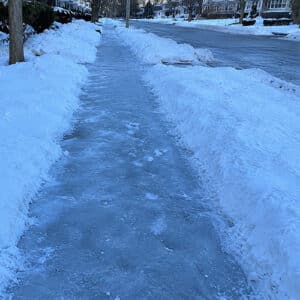
The liability for property owners or persons in control of property for snow and ice in Connecticut is primarily governed by the “ongoing storm” doctrine. The ongoing storm doctrine requires them to remove the hazard (snow/ice) within a reasonable amount of time from the end of a storm. This is typically where you will see a claim involving an untreated sidewalk, unplowed commercial lot, and slippery apartment building walkway.
Cases involving black ice are particularly difficult to pursue as evidence may have been destroyed and/or lost; therefore, it is extremely important to investigate these claims as soon as possible.
Negligent Security Claims
A property owner or person in control of property has a duty to provide reasonable security if they knew, or should have known, that there was a foreseeable likelihood of criminal activity at their rental property/apartment complex/hotel/parking garage/shopping center/office building. Reasonable security is determined by foreseeability – there were previous crimes occurring; lack of adequate lighting; locks; video surveillance; or staff.
What Compensation Can Be Recovered?
Depending on your case, you may be entitled to compensation for medical bills, future treatment, lost wages, loss of earning capacity, pain and suffering, permanent disability, scarring, and emotional distress.
You are likely eligible for damages related to your medical costs (both past and future), lost income, diminished ability to earn a living in the future, physical discomfort or pain, permanent damage to your body, as well as both physical and emotional harm.
What To Do Immediately After a Property Injury
- Document the danger with pictures of it, along with the resulting injuries.
- Report the incident to the property owner, manager, or business and request a copy of any incident report.
- Obtain the full name and contact details of all witnesses.
- Seek immediate medical attention for any type of injury that occurs.
- Save the clothes and footwear that you wore during this time.
- Never provide a verbal taped statement to any insurance company.
- Prior to signing any documents, consult an attorney.
Insurance Company Tactics
Adjusters aren’t on your side, even when they sound friendly. Common tactics include blaming the victim, claiming the hazard was “open and obvious,” letting surveillance footage lapse before anyone requests it, offering a low settlement before you know the full extent of your injuries, pushing for an early recorded statement, and arguing the owner had no notice of the hazard. Knowing these tactics ahead of time helps. Having an attorney who’s dealt with them helps more.
The adjuster may seem nice; however, he/she is working for the insurance company to avoid paying out money. The most frequent tactics used are:
- Placing blame on the injured person for causing their own injury (contributing negligence)
- Stating that the defect/hazard was open and obvious
- Allowing videotape of the incident to go unused prior to requesting it
- Offering the claimant a small amount of money without knowing the total value of the injury
- Taking an early recorded statement from the claimant
- Telling the claimant that the property owner or person in control of the property did not know about the hazard.
A knowledgeable lawyer will help the client understand what the insurance companies are doing.
Frequently Asked Questions
What qualifies as a premises liability case in Connecticut?
An injury caused by a dangerous condition that the property owner or person in control knew or reasonably should have known about and failed to address.
Can I sue if I slipped in a Stamford grocery store?
Yes, if the store failed to address a spill or hazard within a reasonable time.
What if there was no warning sign?
It’s not automatic, but it’s strong evidence the owner failed to meet their duty of care.
How long do I have to file?
Generally two years from the date of injury, though claims against municipalities have much shorter notice deadlines (Conn. Gen. Stat. § 52-584)
Can I recover compensation if I was partially at fault?
Yes, as long as you’re 50% or less at fault.
What evidence should I collect?
Photos, witness contacts, the incident report, and your medical records. An attorney can gather the rest.
What if the accident happened at an apartment complex?
Landlords are generally responsible for common areas like hallways, stairwells, and parking lots.
Can a landlord be responsible?
Yes, for hazards in areas they control or known defects they failed to repair.
What if my child was injured on a playground?
Municipalities, schools, apartment communities, and daycares all have a duty to maintain equipment, as our own case results reflect.
Are businesses responsible for snow and ice?
Generally yes, once they’ve had a reasonable opportunity to clear it after a storm ends.
How much is my premises liability case worth?
It depends on your injuries, expenses, and how your daily life has been affected. An attorney can give you a realistic estimate.
How long do these cases take?
Some resolve in months; more serious or contested claims can take a year or more.
What happens if surveillance footage is deleted?
That may allow a court to draw adverse inferences or impose sanctions in appropriate circumstances, depending on why the evidence was lost.
Why Wocl Leydon Is Different
We’re a Connecticut firm genuinely prepared to take a case to trial, not just settle for the first number an insurance company offers. Beyond that, we bring local Stamford knowledge, a track record in premises liability cases, personalized representation, direct attorney communication, and a thorough investigation process that starts the moment you hire us.
If you or someone you love was hurt on an unsafe property in Stamford, reach out for a free consultation. We handle these cases on a contingency basis, so you owe us nothing unless we recover for you.