


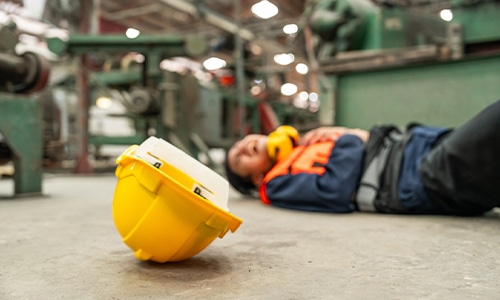
Wocl Leydon has represented injured Workers and their families for over forty years in the state of Connecticut. Our firm knows what it takes to investigate defective products, identify each and every person who contributed to a product defect, and successfully litigate cases resulting in positive outcomes for our clients. If you or a loved one has been harmed due to defective equipment, we encourage you to contact us so we can help explain your potential rights.



What constitutes defective or faulty equipment?
In order to determine whether a defective equipment case exists, there must be evidence demonstrating a product defect existed at some point prior to the injury. There are four primary forms of product defects. Any of these could entitle the plaintiff to hold a manufacturer liable for his/her/their injuries.
- Design Defects: Design Defects exist when a product is inherently unsafe. This occurs prior to the manufacturing process beginning. For example, if a machine’s protective guard is designed to leave an operator’s hands exposed to danger during normal operation, this is a design flaw. All units within the product line contain the design defect.
- Manufacturing Defects: Manufacturing Defects occur when a product deviates from its original design specifications during the manufacturing process. The plan for the product was good; however, something occurred during the production process. A bolt was made from low-quality metal. A weld was completed incompletely. A sensor was incorrectly mounted. One unit of equipment or several units of equipment become hazardous while remaining units produced with the same specs remain non-hazardous.
- Warning and instructional defects: Manufacturers are required to advise consumers regarding hidden dangers associated with their product(s) and to develop proper instruction manuals. If a machine contains inherent dangers that are not discussed in the instructional material or the warning labels are insufficient or buried within the fine print of the instructional material, the manufacturer may be held liable. Manufacturers owe a special responsibility to those who utilize equipment that necessitates specialized training or has hidden hazards.
- Safety feature Failures: Machines are commonly designed with safety features such as emergency stops, interlocks, and guards. These features are designed to protect operators from possible injury. When safety features fail due to poor design, improper installation, or testing inadequacies, the potential for catastrophic injury increases dramatically. A press fails to stop when it should, or a blade guard opens under normal operating conditions.
Additionally, while the actual machine may have departed from the plant with minimal defects, subsequent alterations to safety mechanisms performed by a third-party contractor or unauthorized personnel may have rendered equipment hazardous, creating additional liability for those parties.
Common areas where faulty equipment creates serious injuries
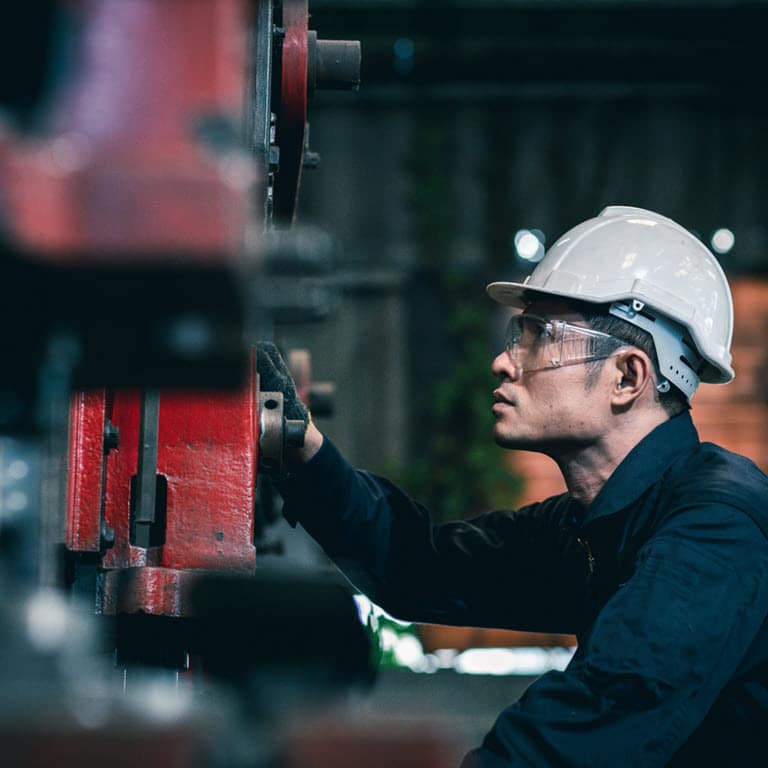 Faulty equipment creates serious injuries throughout a multitude of workplace settings, including:
- Industrial presses & machinery: manufacturing plants
- Construction power tools & heavy equipment: construction sites
- Forklifts & loading equipment: warehouses/distribution centers
- Equipment maintenance: maintenance operations
- Household products & power tools: home environments
Serious injuries caused by faulty equipment
The severity of injuries caused by faulty equipment can vary depending on the nature of the injury. However, many injuries resulting from faulty equipment are severe because the force involved in causing them is great and/or because the malfunction of the equipment is sudden and unexpected. Examples of common injuries caused by faulty equipment include:
- Traumatic amputation of fingers, hands, or limbs
- Crush injuries with broken bones & internal damage
- Fractures requiring surgery and extended rehabilitation
- Traumatic brain injury due to being struck by moving parts or ejected materials
- Spinal cord injury resulting in partial paralysis or full paralysis
- Severe burns due to an electrical failure sparked a chemical release
- Disfigurement from permanent scars
Many of these injuries require extensive surgical procedures, prolonged periods of rehabilitation, and continue to require medical attention after initial treatment. Additionally, many of these injuries can render an individual permanently unable to perform their occupation, further adding to the financial burden on the injured individual.
Related Article(s)
Common Machine-Related Injuries: Causes, Prevention, and Your Rights After a Workplace Accident
Parties who may be responsible for your injuries caused by faulty equipment
An area of confusion concerning product liability cases involving defective equipment is determining who may be held accountable for your injuries. Product liability law permits lawsuits against parties involved in producing and distributing goods throughout the supply chain that contribute to placing hazardous products into circulation. Examples of parties who may be held accountable include:
- Designers & engineers who create flawed concepts for products
- Manufacturers who produce units containing defects or fail to provide adequate safeguards
- Distributors & wholesalers who place hazardous products into commerce
Retailers who sell the equipment - Maintenance contractors who negligently service equipment or modify safety features without authorization
Employers or third-party contractors who disable safety devices on equipment
In addition to pursuing a product liability lawsuit against the manufacturer of defective equipment or third-party providers who contributed to your injuries, you may be able to seek Benefits through both Workers’ Compensation and a product liability action. As previously stated, Workers’ Compensation is typically limited to medical expenses and wage replacement. A successful product liability action can result in awards for economic losses, including loss of earnings capacity, as well as non-economic losses such as pain and suffering and loss of enjoyment of life.
Can I sue my employer directly?
As a general rule, employees are prohibited from suing their employers directly for negligence in workplace accidents unless their employer intentionally committed a wrongful act directed towards them. Workers’ Compensation Benefits provide injured employees with access to medical care and a percentage of lost wages during recovery. However, Workers’ Compensation does not award payment for pain and suffering, emotional distress, or total loss of earning capacity.
However, since Workers’ Compensation does not permit employees to sue their employers directly for negligence related to a workplace injury, an injured employee may file a product liability action against a third-party supplier of equipment used in connection with their employment. When an injured employee files a product liability suit against the manufacturer of defective equipment or other suppliers, they may potentially recover damages not covered by Workers’ Compensation, including full lost wages, pain and suffering, loss of enjoyment of life; as well as punitive damages in extreme cases.
If an injured employee receives Workers’ Compensation payments and then recovers monetary damages through a successful product liability lawsuit, their Workers’ Compensation insurance carrier will generally issue a lien against any monetary recovery received by the employee for any Workers’ Compensation payments made on behalf of the employee. Determination of how liens are processed and resolved can be quite complicated.
Because coordinating both a Workers’ Compensation claim and a product liability lawsuit can be difficult without having an experienced attorney familiar with both areas of law, it is essential to have representation that can coordinate both actions in a manner which maximizes your recovery.
We're Here to Help.
Evidence required to support a product liability claim
Solid cases begin with solid evidence. The earlier you act in your claim process, the better positioned you will be to build a strong case.
Some of the key elements of evidence required to build a strong case include:
- Original equipment (preserved in the same state as when the incident occurred)
- Maintenance/inspection records
- Operator manuals/warranty labels/warning labels
- Photographic documentation of the scene and the equipment
- Statements from witnesses
Technical experts may be consulted to evaluate/design/manufacture defects/safety failures. Also, lawyers can request documents related to previous incidents/recalls/claims from the manufacturers/distributors/retailers and others that may not be available to the public.
Types of Compensation for a successful product liability claim
The amount of compensation received will largely depend upon the severity of the injury suffered and the extent to which your life has been impacted. A successful product liability claim could entitle an individual to receive damages for:
- Past/future medical costs associated with treatment for injuries sustained (including future medical needs)
- Lost wages/reduced earning capacity
- Suffered Pain
- Psychological distress
- Loss of enjoyment of life
- Physical scars
Note: Courts may also award punitive damages to deter egregious behavior demonstrating reckless disregard for safety.
Connecticut statute of limitations and deadlines
Connecticut has a statute of limitations for product liability cases that generally provides three (3) years from the date the injury was suffered or discovered, or could have been discovered by reasonable means; however, there is another potential time frame of ten (10) years measured from when the seller parted with possession or control of the product. However, this ten (10)-year time frame can include exceptions to the rule. In addition to the above-mentioned time frames applicable to product liability cases, other claims stemming from your auto accident may also have additional time frames in which you can file. It would be advisable to consult an attorney as soon as possible to discuss these various deadlines.
Actions to take following a faulty equipment injury
First and foremost, prioritize your immediate well-being in addition to preserving your legal rights after being injured as a result of faulty equipment. Follow these basic steps:
- Obtain medical attention immediately
- Notify your supervisor/boss/employer or property owner regarding the incident
- Do not allow repairs/maintenance to be performed on the equipment until legal advice has been obtained
- Document photos of the scene/your injuries/the equipment
- Gather witness names & contact information
- Refuse to sign any documents, return any equipment without first consulting with a lawyer
- Schedule a consultation with an attorney immediately after an incident occurs.
Why hire Wocl Leydon for a faulty equipment lawsuit?
Wocl Leydon has practiced law for more than 40 years, handling serious personal injury cases. The attorneys at Wocl Leydon have extensive experience in complex product liability claims requiring analysis of multiple parties and technical issues.
Wocl Leydon has successfully litigated several significant product liability cases against major manufacturers and corporations. Our attorneys are respected professionals within our community and possess impressive histories of success in trial and negotiated settlements.
You’ll find our counsel open and direct. We offer free consultations, and we handle all cases on a contingency fee basis; no fees are charged unless you receive compensation.
FAQs about faulty equipment lawsuits
Can I collect compensation even if I was partially responsible for my accident?
Yes. When making a product liability claim under Connecticut law, if there were some degree of fault on your part regarding your accident, this does not necessarily eliminate your ability to receive compensation. Your amount of recoverable compensation (damages) is simply adjusted by the percentage of responsibility assigned to you. For instance, if your damages equal $100,000 and you were determined to have been 20 percent at fault for your accident, then your recovery would be limited to $80,000.
However, you must still demonstrate all the elements necessary to make a successful product liability claim. This includes demonstrating that a defective condition of a product directly resulted in your injuries. Our office will assist you in determining how your accident occurred and evaluating any claims made that your actions directly contributed to the cause of your injuries.
Does the age of the machine matter?
Yes. Older machines may impact the timing and documentation required to pursue your claim. Generally, in Connecticut, a plaintiff has up to ten years after the date upon which a defendant last transferred possession or control of the product to file suit. There is an exception however, if you can show that your injury occurred within the product’s “useful safe life.”
Older machinery is not automatically excluded. All factors such as regular maintenance and upkeep; the extent of deterioration or damage; changes to the equipment; and any representations by the manufacturer concerning the expected length of its service life can influence how a claim is evaluated. Our office will review the specific history of your machine(s), to determine if you still have time to file a complaint.
How long will my case take?
There is no one-size-fits-all timeline for faulty equipment cases.
The amount of time required for resolution depends on many factors including:
- Equipment investigation.
- Availability and accessibility of evidence.
- Your medical treatment and prognosis.
- Number of parties involved in the lawsuit.
- Whether there are disputes concerning who was responsible.
Investigation into the faulty equipment may involve inspection, evaluation of maintenance records, and expert testimony. Likewise, the scope of your past, present, and future medical care and expenses assists in establishing all aspects of your claim. Settlement negotiations prior to filing a lawsuit can result in quicker resolution, whereas going through a trial and/or appeals process could delay resolution. Upon examining your individual circumstances, we will advise you on the potential phases of your case and provide an estimate of how long each phase should reasonably take based on current information.
Does the fact that a recall existed help my claim?
A recall may potentially be beneficial to you if the recalled item includes the equipment involved in your accident and addresses the same type of defect that injured you. However, a recall does not guarantee entitlement to reimbursement. You will still need to prove that the product was defective and caused your injuries, as well as substantiate your damages. A product liability claim may exist regardless of a recall.