
 (203) 333-3339
Injured in a Rideshare Crash? Hire a Stamford Uber & Lyft Accident Lawyer
Last updated Friday, January 23rd, 2026

Getting into an accident while using a rideshare service, or colliding with an Uber or Lyft driver, creates legal complications most people never see coming. These cases don’t fit neatly into standard car accident claims. Multiple insurance policies may apply depending on what the driver was doing at the exact moment of the crash, and determining who pays for your medical bills, lost income, and vehicle damage often requires an attorney who understands how rideshare companies structure their coverage.
If you’ve been hurt in a rideshare accident in Stamford, you’re facing questions about liability, insurance coverage, and whether the driver, the rideshare company, or another party should be held responsible. Wocl Leydon represents both passengers injured while riding in an Uber or Lyft and other drivers or pedestrians struck by rideshare vehicles. We handle the insurance disputes and legal maneuvering so you can focus on recovery.

Get Your FREE Case Review,
In Person or Virtually Online
Why Rideshare Accidents Are Different
A collision involving an Uber or Lyft driver isn’t like a typical car accident between two private vehicles. Rideshare companies classify their drivers as independent contractors, which affects how liability works. At the same time, these companies provide insurance policies that activate under specific conditions, creating a tiered system that determines which coverage applies at any given moment.
App Off: When a rideshare driver isn’t logged into the app, they’re operating as a private driver. Only their personal auto insurance applies, and many personal policies exclude coverage for commercial activity. If the driver’s policy denies the claim, recovering compensation becomes more difficult.
App On, Waiting for a Ride Request: Once the driver logs into the app but hasn’t yet accepted a ride, the rideshare company provides limited liability coverage. For Uber and Lyft, this typically includes up to $50,000 per person and $100,000 per accident in bodily injury liability, plus $25,000 in property damage. This coverage is secondary, meaning the driver’s personal insurance is supposed to pay first if applicable.
En Route to Pick Up a Passenger or During a Trip: When a driver has accepted a ride request or has a passenger in the vehicle, the rideshare company’s full commercial policy kicks in. Both Uber and Lyft provide $1 million in liability coverage during this phase, along with uninsured/underinsured motorist protection. This is the strongest coverage window, but even then, disputes can arise over fault, the extent of injuries, and whether other parties share liability.
Understanding which phase the driver was in at the time of your accident determines where your claim should be filed and what kind of resistance you might face. Insurance adjusters representing rideshare companies often try to minimize payouts or shift blame, especially in borderline cases where the app status isn’t immediately clear.
Related Article(s)
Hit & Run or Uninsured Driver? Know Your Rights in Connecticut
Injured as a Passenger in Stamford? We Fight for Your Rights
Who Can Be Held Liable for Your Injuries?
Liability in a rideshare accident depends on how the crash occurred, who was at fault, and what the driver was doing when it happened. Several parties might share responsibility.
The Rideshare Driver: If the driver caused the collision through negligence, such as running a red light on Washington Boulevard or making an unsafe turn near the Stamford Transportation Center, they can be held personally liable. However, their personal assets are usually limited, which is why pursuing the rideshare company’s insurance becomes necessary.
The Rideshare Company: Uber and Lyft provide insurance coverage during active rides and while drivers are waiting for requests, but these companies aggressively defend claims. They may argue that the driver wasn’t working at the time of the crash, that their policy doesn’t apply, or that the passenger or another driver contributed to the accident. Holding a rideshare company accountable requires documentation, witness statements, and often expert testimony about app usage and driver status.
Another Driver: If a third party caused the accident, such as a drunk driver or someone texting while driving, that person’s insurance should cover your damages. In these cases, the rideshare company’s uninsured or underinsured motorist coverage may also come into play if the at-fault driver lacks adequate insurance.
Multiple Parties: Connecticut follows a modified comparative negligence rule, which means you can recover damages even if you were partially at fault, as long as your share of the blame is less than 51%. If multiple drivers contributed to the crash, each party’s percentage of fault will affect how much compensation you can collect.
Determining liability often requires reconstructing the accident, obtaining police reports, and gathering evidence before it disappears. Rideshare companies don’t voluntarily hand over trip data or driver logs, so legal representation becomes necessary to secure that information.
Get Your FREE Case Review,
In Person or Virtually Online
Steps to Take After an Uber or Lyft Crash
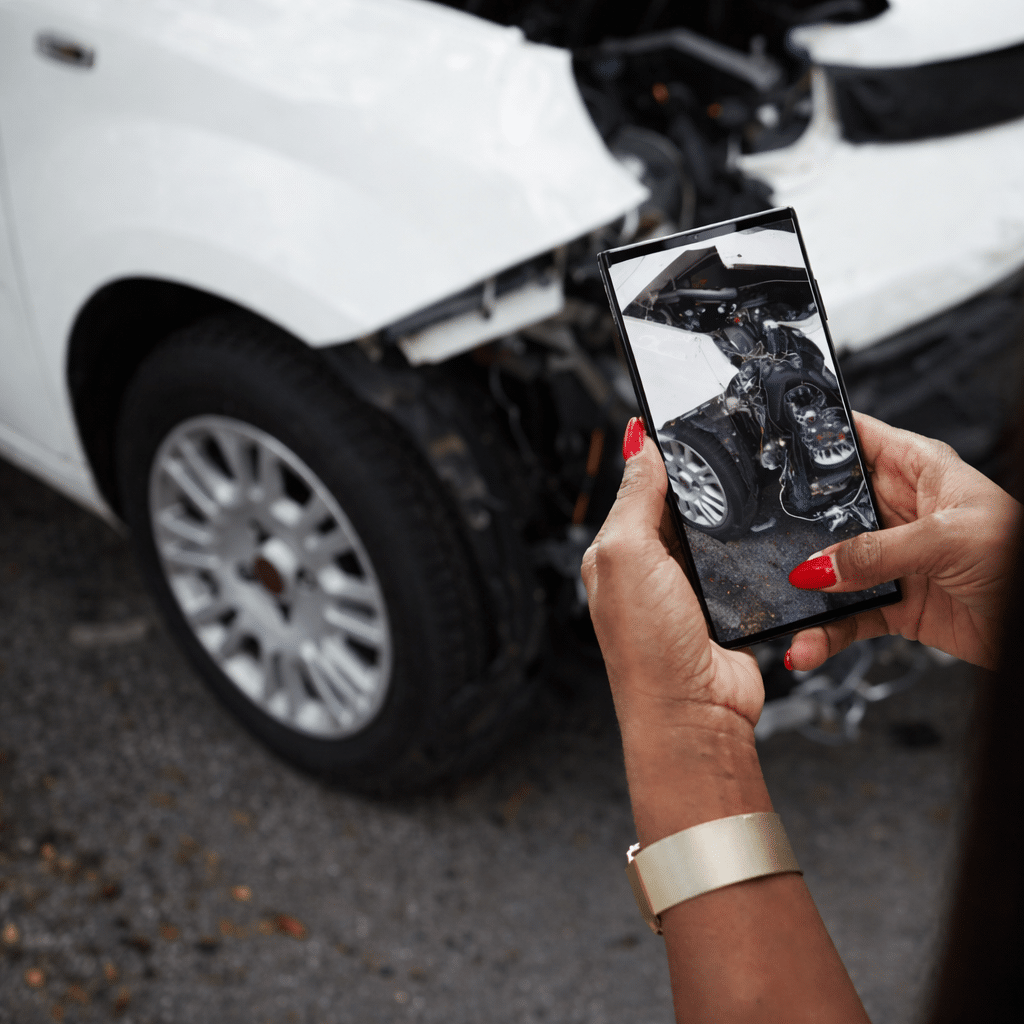 What you do immediately after a rideshare accident can strengthen or weaken your ability to recover compensation. Here’s what to prioritize.
Get Medical Attention: Even if you feel fine, adrenaline can mask injuries. Soft tissue damage, concussions, and internal injuries may not show symptoms right away. Seeing a doctor creates a medical record linking your injuries to the accident, which insurance companies will scrutinize later.
Document the Scene: If you’re able, take photos of vehicle damage, road conditions, traffic signals, and any visible injuries. Get the driver’s name, license plate, insurance information, and confirm whether they were logged into the Uber or Lyft app. Collect contact information from witnesses.
Report the Accident Through the App: Both Uber and Lyft have in-app reporting features for accidents. Filing a report creates an official record with the company and starts the claims process. Don’t assume the driver will report it.
Avoid Giving Recorded Statements to Insurance Adjusters: Adjusters for rideshare companies or the driver’s personal insurer may contact you quickly, often asking for a recorded statement. Anything you say can be used to reduce or deny your claim. Politely decline and refer them to your attorney.
Preserve Evidence: Save trip receipts, app records, text messages, and any communication with the driver or rideshare company. This documentation helps establish the timeline and proves you were a passenger or involved party.
Contact an Attorney Before Accepting a Settlement: Insurance companies often make low initial offers to close claims quickly. Once you accept, you lose the right to seek additional compensation, even if your injuries worsen or new expenses arise.
Compensation for Rideshare Drivers vs. Passengers
The type of compensation available depends on your role in the accident.
Passengers injured in a rideshare vehicle typically have strong claims because they aren’t at fault for the crash. You can pursue damages for medical bills, rehabilitation costs, lost wages, pain and suffering, and property damage. If the rideshare driver caused the accident, the company’s $1 million policy should cover your injuries. If another driver was at fault, you can file a claim against their insurance and, if needed, tap into the rideshare company’s uninsured motorist coverage.
Rideshare Drivers face more restrictions. If you were injured while driving for Uber or Lyft and another party caused the crash, you can file a liability claim against the at-fault driver. However, if you caused the accident, you’re unlikely to recover compensation from your own insurance or the rideshare company. Drivers also face concerns about vehicle damage, lost income from being unable to work, and the risk of deactivation from the platform, which can cut off your source of income entirely.
Drivers hurt by another motorist while waiting for a ride request or during a trip should act quickly. Rideshare companies have been known to deactivate drivers involved in accidents, even when they weren’t at fault. Proving the other driver’s negligence and securing compensation fast can prevent financial hardship.
How Wocl Leydon Helps with Rideshare Claims
Rideshare accident cases require more than filling out an insurance form. We investigate the accident, obtain trip and app data from Uber or Lyft, work with accident reconstruction experts when needed, and handle negotiations with multiple insurance companies. If a fair settlement isn’t offered, we file suit and take the case to trial.
We represent passengers who suffered injuries during a ride, pedestrians struck by rideshare drivers, and other motorists involved in collisions with Uber or Lyft vehicles. We also assist rideshare drivers who were injured by another party’s negligence and need to protect their income while recovering.
Our office is located in Stamford, and we understand how traffic patterns, congestion near the Metro-North station, and high-volume rideshare use in downtown areas contribute to accidents. We know the local courts, the insurance adjusters who handle rideshare claims in this region, and how to build a case that holds up under scrutiny.
You don’t pay upfront fees, and we only collect payment if we recover compensation for you. Call us for a free consultation to discuss your rideshare accident and what your claim is worth.