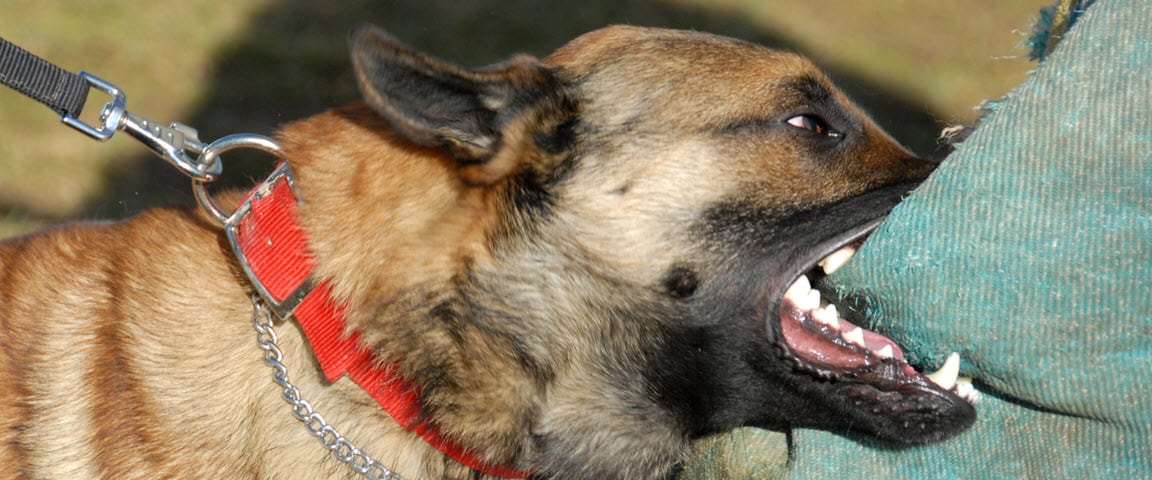
Stamford Dog Bite Lawyer

A dog biting

A dog bite can happen in seconds. One moment you’re walking through Cove Island Park or visiting a neighbor’s home, and the next you’re dealing with a wound, a shock to your system, and a pile of questions about what to do next. Connecticut law is actually pretty clear on this: when a dog bites you, the owner or keeper of that dog is responsible, even if the dog has never hurt anyone before. You don’t have to prove the owner was careless. You just have to show you weren’t trespassing and didn’t provoke the dog.

That said, navigating the insurance process, documenting your injuries, and dealing with an owner who may be a friend or neighbor is harder than the law makes it sound. That’s where we can help.

Key Takeaways

  • Connecticut’s dog bite law holds owners and keepers strictly liable, meaning you do not need to show the dog had a history of biting.
  • You should report the bite to Stamford Animal Control promptly. That report becomes part of your case file.
  • Injuries often go beyond the initial wound. Nerve damage, scarring, infection, and anxiety are all part of what a complete claim should capture.
  • Most dog bite claims resolve through the owner’s homeowners’ insurance, but early offers often undervalue your damages. Don’t sign anything before speaking with an attorney.
  • There are time limits for filing. Waiting costs you evidence, and in some cases, your right to recover at all.

Get your free case review

Get Your FREE Case Review,
In Person or Virtually Online

What to Do After a Dog Bite in Stamford

Immediate Safety and Medical Steps
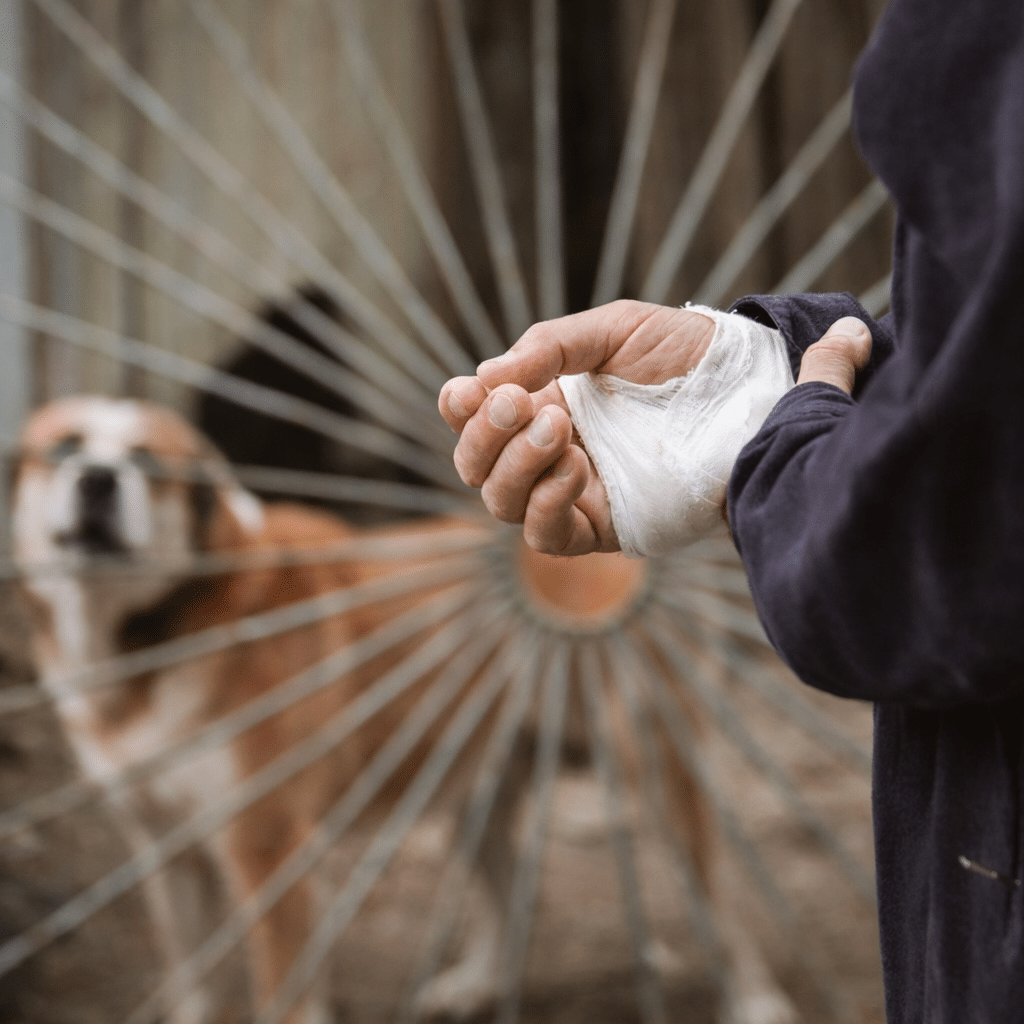
Bandaged hand with dog in the backgroundThe first priority is your health, not the legal case. Dog bites carry a real infection risk because of the bacteria in a dog’s mouth. Even a bite that doesn’t look serious can become dangerous quickly.

Clean the wound right away with soap and water, ideally for several minutes. Apply pressure if there’s significant bleeding. Puncture wounds can be deceptive since they may look small on the surface but go deeper than they appear.

Seek medical care the same day, even if you feel okay. Signs of infection, including increasing redness, warmth, swelling, or discharge, can develop within 24 to 48 hours. Deep wounds may require stitches or surgical closure, and your doctor may recommend a tetanus booster depending on your vaccination history. In some situations, your provider will also assess rabies risk and discuss post-exposure options with you.

If the bite is severe or you’re unsure of the dog’s vaccination status, go directly to an emergency department. Stamford Hospital’s Emergency Department is located at 1 Hospital Plaza (203-276-7777) and is equipped to treat and document traumatic wounds.

Report the Bite and Create Documentation

Reporting the bite to Stamford Animal Control is one of the most important steps you can take, both for public safety and for your own claim. Animal Control investigates bites, can require the dog to be quarantined for rabies observation, and creates an official record of the incident. That report can be critical later.

While the events are fresh, write down everything you remember: where the bite happened, what the dog was doing before it attacked, whether it was on or off a leash, whether the owner was present, and who witnessed it. Take photos of your injuries as soon as possible and continue photographing them over the following days as bruising and swelling develop.

Save all medical records, bills, and any correspondence with the dog owner or their insurer.

Local Resources

Stamford Animal Control (203) 977-4437 Located at the Stamford Government Center, 888 Washington Blvd, Stamford, CT 06901

Stamford Hospital Emergency Department 1 Hospital Plaza, Stamford, CT 06902 (203) 276-7777

What Not to Do

Do not argue with the dog owner at the scene about who is at fault. Keep things civil and get their contact information, along with the dog’s vaccination records if they’ll share them. Confrontations don’t help your case and can complicate things later.

Don’t post about the incident or the owner on social media. What you say online can be used against you, and making public accusations can create collateral problems.

Most importantly, do not sign any release or accept any settlement payment from the owner or their insurer before talking to an attorney. An early offer may not account for the full cost of your treatment, any future care, or your pain and suffering. Once you sign, you typically cannot go back for more.

Get your free case review

Get Your FREE Case Review,
In Person or Virtually Online

Connecticut Dog Bite Law, Explained in Plain English

The Strict Liability Rule and What It Covers

Connecticut General Statutes § 22-357 is the state’s dog bite law, and it’s one of the strongest ones in the country from a victim’s perspective. Under this statute, the owner or keeper of a dog is liable for damages caused by that dog to a person’s body or property. Crucially, there is no “one free bite” rule in Connecticut. The owner does not get a pass just because the dog never acted aggressively before.

This strict liability standard means you don’t have to prove the owner was negligent or that they knew the dog was dangerous. If the dog bit you and you weren’t trespassing or provoking it, the owner is responsible.

Exceptions That Can Affect Liability

The statute has two main exceptions. The first applies if you were trespassing at the time of the bite. If you didn’t have the right to be on the property where the bite occurred, the owner’s liability may be reduced or eliminated.

The second exception applies if you were teasing, tormenting, or abusing the dog. This is a fact-specific inquiry. Reaching toward a dog or being near it generally doesn’t qualify as provocation, but courts will look at the specific circumstances.

Special Rule for Young Children

Connecticut law includes an important presumption for children under seven years old. The statute presumes that a child of that age was not trespassing and was not provoking the dog. The burden shifts to the owner to prove otherwise. In practical terms, this means the bar for recovery on behalf of a young child is even lower, and claims involving injured children tend to be treated seriously by insurers.

Who Counts as a Keeper

The statute covers not just the dog’s owner but also anyone who is acting as a “keeper” of the dog at the time of the bite. Connecticut courts have interpreted “keeper” to mean someone who has custody or control of the dog, even temporarily. This can include a dog walker, a house sitter, a family member who was watching the dog that day, or a tenant who kept a dog on a landlord’s property with the landlord’s knowledge and permission.

One important exception: law enforcement agencies are not liable under this statute for bites inflicted by dogs used in official police work. Those situations involve separate legal considerations.

Stamford Rules That Often Matter in Real Cases

Stamford’s municipal code requires that dogs be kept on a leash when in public places, including parks, sidewalks, and other common areas. If a dog was off-leash in a public space when it bit you, that violation is relevant to your claim and can support the argument that the owner was acting carelessly, regardless of the strict liability standard.

The leash requirement does not apply within fenced areas that are designated for off-leash use. If you were bitten in an off-leash area, the owner will raise that context, but it does not necessarily eliminate your claim, particularly if the dog attacked without any provocation.

An “unprovoked attack” in simple terms means the dog initiated the bite without the person doing anything to cause it. Walking past the dog, making eye contact, or being near the owner is not provocation. Courts evaluate these situations based on what a reasonable person in the same circumstances would have understood about the risk.


Time Limits and Why Acting Quickly Matters

The Standard Deadline Most People Hear

Connecticut has a two-year statute of limitations for personal injury claims. In most dog bite cases, that clock starts running on the date of the bite. If you miss the deadline, your case is gone. No extension, no exceptions in ordinary circumstances.

Two years sounds like a long time, but it goes faster than you expect, especially when you’re focused on recovering and managing medical appointments. And in practice, waiting has real costs even before the deadline. Witnesses move or forget details. Surveillance footage gets overwritten. Animal Control records may be harder to obtain. The earlier you start building a case, the stronger your position.

Dog Bite Statute Timing and Negligence Timing

It is worth knowing that some dog bite claims in Connecticut are brought under the dog damage statute, while others involve a negligence theory against the owner or another responsible party. Depending on the specific facts and who you are pursuing, the applicable deadlines and legal standards can differ somewhat. This is one reason it’s worth getting a case review from an attorney rather than assuming one set of rules applies to your situation.

Practical Timeline of a Dog Bite Claim

Most dog bite claims move through a fairly predictable sequence. First comes the investigation: gathering medical records, obtaining the Animal Control report, photographing injuries, and identifying witnesses. From there, your attorney will typically file an insurance claim with the owner’s homeowners’ carrier. Once the insurer accepts the claim, there’s a period of negotiation where your attorney presents your damages and pushes for fair compensation. Most cases resolve at this stage without going to court. If the insurer refuses to make a reasonable offer, filing suit is the next step, and the credible threat of litigation often moves things forward. Final resolution can happen anywhere from a few months to over a year, depending on the severity of the injuries and how the insurer handles the claim.

Injuries and Long-Term Effects

Common Physical Injuries

Dog bites produce a range of injuries, and the severity depends on the size of the dog, the location of the bite, and how quickly treatment is received. Deep puncture wounds are a major concern because they introduce bacteria well below the skin surface, where cleaning is difficult, and infection can spread rapidly. Cellulitis, abscesses, and in serious cases, bone or joint infections, are recognized medical complications.

Facial bites are particularly serious because of the risk of permanent scarring and the psychological impact of visible disfigurement. Bites to the hands can cause nerve damage that affects grip strength and fine motor control, sometimes permanently. Children are especially vulnerable to head, neck, and facial injuries because of their height relative to most dogs.

Tetanus and, in rare situations, rabies are additional medical concerns that your treating physician will address. In severe attacks, surgeries to repair tissue, tendons, or nerves may be required, followed by months of rehabilitation.

Psychological Harm and Recovery Costs

The physical injuries are often the visible part of a dog bite case, but they are rarely the whole story. Many people who have been attacked by a dog develop lasting anxiety, including fear of dogs, reluctance to go outdoors, sleep disturbances, and heightened startle responses. For children, these effects can be especially pronounced and can interfere with school and social development.

Counseling and therapy are legitimate, compensable parts of a dog bite claim when they are recommended and documented by a professional. If you are experiencing anxiety, nightmares, or avoidance behaviors following an attack, it’s worth discussing that with your doctor and noting it in your records. These experiences are real, and they have real value in a damages calculation.

Connecticut Dog Bite Settlements

Why There Is No Single Average Settlement That Applies to Everyone

You’ll see numbers online. Don’t put too much stock in them. A “Connecticut dog bite settlement average” is a statistical artifact that flattens thousands of very different cases into a meaningless number. A bite that required three stitches on someone’s arm and resolved in two weeks is not the same case as a mauling that caused nerve damage, permanent scarring, and months of treatment. Lumping those together tells you nothing useful about what your claim might be worth.

What we can tell you is what actually drives value in these cases, and that is a more useful frame.

What Actually Drives Settlement Value in Connecticut Dog Bite Claims

Severity of injury is the starting point. Cases involving surgery, hospitalization, infection requiring IV antibiotics, or permanent scarring carry more weight than minor wounds. Visible scarring on the face, neck, or hands tends to produce higher settlements because the impact is lasting and provable.

Documentation is what separates a well-compensated claim from an undervalued one. Medical records that thoroughly describe the injury and treatment, photos taken over the course of recovery, and a clear record of missed work and out-of-pocket costs give your attorney something concrete to work with.

Lost income matters. If your injuries kept you from working, even temporarily, that loss is economic and calculable. For people with physically demanding jobs or professions that require full use of their hands, the impact can be substantial.

Insurance policy limits are a practical constraint. Most dog bite claims are paid through the owner’s homeowners’ insurance policy. Connecticut homeowners’ policies typically include personal liability coverage, and the available limits directly affect what can be recovered without going further. Your attorney can help identify all available sources of recovery.

Future care costs are relevant when treatment is ongoing or when surgery or therapy is anticipated. Those projected costs belong in your demand.

Insurance Context

According to data from the Insurance Information Institute, dog-related injury claims paid through homeowners insurance have increased significantly in both volume and average cost per claim over recent years, reflecting rising medical costs and higher claim valuations. In recent years, the average cost per dog bite claim nationally has been in the tens of thousands of dollars, driven largely by medical expenses. This data reflects insurance claim payouts, not any promise of what a specific case will settle for. Every case is different.

Damages Checklist

Economic damages you can document: emergency care, surgery, hospitalization, follow-up visits, prescription medications, physical therapy, and any future medical treatment your doctor anticipates.

Non-economic damages: pain and suffering, emotional distress, anxiety, loss of enjoyment of activities you could do before the bite, and visible scarring or disfigurement.

Lost income: wages lost while recovering, plus any reduction in earning capacity if the injury is permanent.

Out-of-pocket costs: transportation to medical appointments, medical equipment, and any home care needed during recovery.

How Our Firm Builds a Dog Bite Case

Evidence We Look for in Stamford Cases

Strong dog bite cases are built on documentation, and we start gathering it as quickly as possible. The evidence we pursue typically includes photographs of your injuries at every stage of healing, your complete medical records, the official Stamford Animal Control investigation report, and any prior bite history on file with Animal Control for the same dog.

Witness statements matter. If anyone saw the attack, their account can counter any version the dog owner puts forward. We also look for video, whether from a doorbell camera, a nearby business, or any other source that may have captured the incident or its aftermath.

Prior incidents involving the same dog are significant even under Connecticut’s strict liability framework because they can support a claim that the owner had reason to take precautions and didn’t.

How We Deal with Insurers

When you’re dealing with a dog bite claim, you’re almost always dealing with a homeowners’ insurance adjuster on the other side. Adjusters are trained to resolve claims as cheaply as possible. Early offers frequently come in before your treatment is complete, which means they can’t possibly reflect your full damages.

We don’t let insurers set the pace. We document your case thoroughly, present a detailed demand that accounts for every element of your damages, and push back on lowball offers with evidence. Insurers respond differently when they understand they’re dealing with an attorney who knows the value of the claim and is prepared to litigate it.

When We Recommend Filing Suit

The honest answer is that most dog bite cases in Connecticut resolve before trial. But the threat of litigation is not hypothetical on our end. We’re a trial firm. We’ve taken cases to verdict when the insurer’s position was unreasonable, and we’re prepared to do that here. Insurers know which firms will actually go to court and which ones won’t. That knowledge affects how they negotiate.

We’ll tell you clearly if we think a settlement offer is reasonable. We’ll also tell you clearly when we think it isn’t, and what the realistic path forward looks like in either direction.

Why Choose Wocl Leydon for a Stamford Dog Bite Case

Local Presence and Access

Our office is in Stamford, at 80 Fourth Street. We know the neighborhoods where these incidents happen, we’re familiar with Stamford Animal Control’s process, and we know the hospitals where our clients are treated. When you call us, you talk to an attorney. You’re not routed to an intake coordinator who then routes you to a paralegal. A partner at this firm will personally oversee your case from the initial consultation through resolution.

Credibility Signals You Can Verify

Wocl Leydon has represented injured people in Stamford and Fairfield County for over 40 years. Our attorneys are recognized by Super Lawyers, Best Lawyers, the National Trial Lawyers Top 100, and hold an ABOTA membership. We’ve secured verdicts and settlements in the millions of dollars across a range of serious injury cases. You can review our case results, read client reviews, and look up our attorneys on our website. We don’t ask you to take our word for it.

Fee Structure and What a Free Case Review Actually Means

We handle dog bite cases on a contingency fee basis. That means you pay nothing up front and nothing out of pocket. Our fee comes from your recovery, and only if there is one. If we don’t recover for you, you owe us nothing in legal fees.

The free case review is a real conversation with an attorney, not a sales call. We’ll listen to what happened, ask questions, and give you an honest assessment of whether you have a claim and what it might involve. There is no obligation to hire us, and no pressure.

Frequently Asked Questions

What if the dog had never bitten anyone before? It doesn’t matter under Connecticut law. The strict liability rule means owners are responsible for the first bite, not just dogs with a documented history. You do not need to prove the dog was known to be dangerous.

What if I were bitten at a friend’s or family member’s home? This is one of the harder questions emotionally, but the legal answer is straightforward: the same law applies. In most situations, the claim runs through the homeowner’s or renter’s insurance policy, not the individual’s personal finances. You’re not suing your friend; you’re making a claim against their insurance coverage.

What if my child were bitten? Children under seven are entitled to a legal presumption that they were not trespassing and not provoking the dog. Beyond that, claims involving child victims often involve more significant damages because of the physical vulnerability of children and the potential for lasting psychological harm. These cases deserve careful attention from the start.

What happens after a bite report in Stamford? Stamford Animal Control will investigate, typically by contacting the dog’s owner, verifying vaccination records, and assessing whether a quarantine period is required. The investigating officer’s report becomes part of the official record. You should request a copy of that report for your own records.

Can I recover compensation if I was partly at fault? Connecticut follows a comparative negligence rule. As long as you were not more than 50% responsible for what happened, you can still recover compensation. Your recovery is reduced by your percentage of fault. For example, if you were found to be 20% at fault, you’d recover 80% of your damages.

How long do I have to file? Generally, two years from the date of the bite for most claims. However, the specific deadline can depend on what theory of liability is being pursued and who is being named. Don’t cut it close. Evidence deteriorates, and the process takes time to do well.

Ready to Talk About What Happened?

If you were bitten by a dog in Stamford or anywhere in Fairfield County, we’d like to hear from you. We’ll investigate what happened, explain your options honestly, and pursue compensation where the facts support it.

You don’t owe us anything for that conversation. Call us at (203) 693-9070, book a consultation online, or send us your case details, and we’ll respond within 15 minutes during business hours. In person or virtually, whatever works for you.

Get your free case review

Get Your FREE Case Review,
In Person or Virtually Online